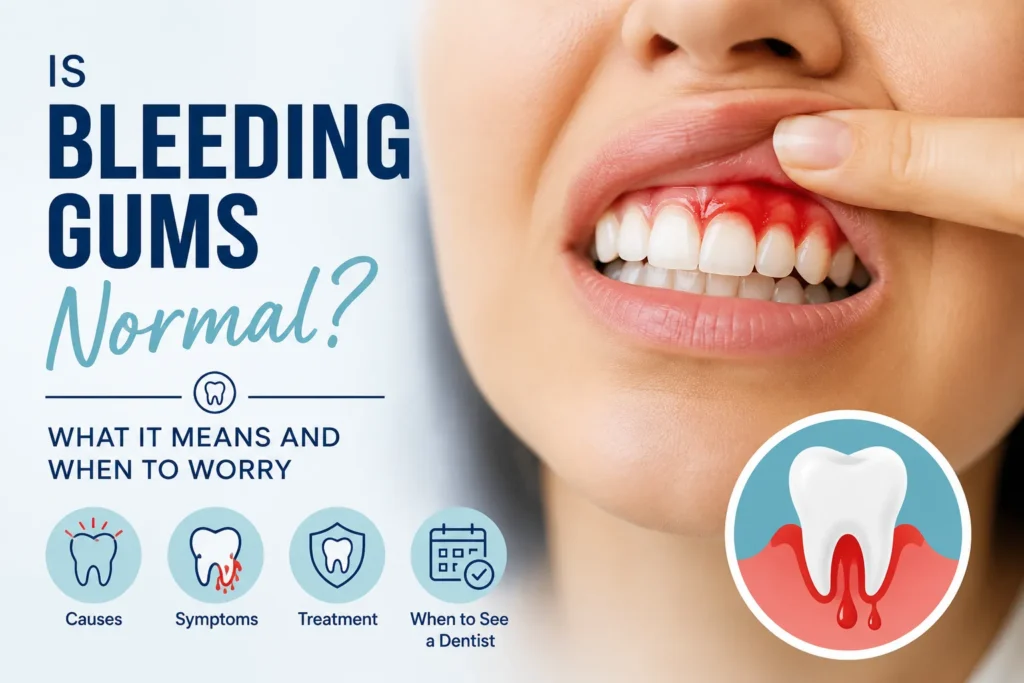
You spit out a little pink after brushing and immediately wonder: Is that normal? Should I be worried? The short answer is that occasional, minor bleeding isn’t always cause for alarm, but it’s also never something to just shrug off.
Bleeding gums are one of the most common oral health concerns, and they’re also one of the most frequently ignored. Understanding what’s actually causing the bleeding, and when it crosses the line into something that needs professional attention, is the first step toward protecting your smile long-term.
Here’s the honest answer: healthy gums don’t bleed. Not when you brush, not when you floss, not when you eat. If your gums are bleeding regularly, that’s your mouth flagging that something is off.
That said, context matters. If you’ve just started flossing again after a long gap, or you recently switched to a firmer toothbrush, a small amount of bleeding in the first few days isn’t unusual. Gum tissue that isn’t regularly stimulated is more sensitive and takes longer to toughen.
But if bleeding is happening consistently—every time you brush, without an obvious explanation—it’s worth paying attention to.
Bleeding gums can have several causes, ranging from easy-to-fix habits to conditions that need professional treatment. The most common include:
Gingivitis is the earliest stage of gum disease, and bleeding gums are often its first visible symptom. It develops when plaque—the sticky film of bacteria that forms on teeth—builds up along the gumline, causing inflammation.
The good news: Gingivitis is reversible with improved oral hygiene and professional cleaning.
These can be early signs of gum disease, and the earlier it’s caught, the easier it is to treat.
It’s tempting to wait and see. But bleeding gums rarely resolve on their own without some kind of intervention, and untreated gum disease follows a predictable progression.
Gingivitis—the early, reversible stage—can advance into periodontitis, a more serious form of gum disease where infection spreads below the gumline and begins to damage the bone that supports your teeth. From there, tooth loss becomes a real possibility, not a distant hypothetical.
Beyond your mouth, research links chronic gum disease to systemic health issues, including heart disease, diabetes complications, and adverse pregnancy outcomes. The bacteria driving oral infection don’t always stay contained to the gum tissue.
If you’ve been noticing symptoms, our periodontal maintenance services are designed to detect and manage gum disease at every stage before it can progress.
Depending on what’s causing the bleeding, there’s a lot you can do at home, and some things only a dental professional can address.
At Home
Our oral hygiene guidance page has more on building habits that support healthy gums between visits.
With Professional Help
If the bleeding is related to gingivitis or early gum disease, a professional cleaning is usually the turning point. Your dental hygienist can remove the tartar buildup that brushing and flossing simply can’t reach, and that’s often what’s driving the inflammation.
For more advanced cases, your dentist may recommend a deeper cleaning called scaling and root planing, which clears buildup below the gumline and gives the gum tissue a chance to heal and reattach.
If your gums have been bleeding for more than a week or two—even if it seems minor—it’s time to get it checked. Don’t wait for the bleeding to get worse, or for pain to show up. Gum disease can be largely painless in its early stages, which is exactly why it so often goes untreated until more significant damage has occurred.
Come in sooner if you notice any of the serious signs listed above, if you’re pregnant or managing a chronic health condition, or if it’s simply been a while since your last cleaning.
You can schedule an appointment at Garrett Family Dental online. We’ll take a look at what’s going on and give you a clear picture of what’s driving the bleeding and what comes next.
The most effective prevention is consistency. Gum health doesn’t respond well to occasional bursts of effort followed by long stretches of neglect, it requires a steady routine.
Healthy gums are largely a product of consistent habits and regular professional care. If your routine has slipped, it’s never too late to reset it.
Bleeding gums are your mouth’s way of asking for attention. Whether you’re dealing with early-stage gingivitis or just want to understand what’s going on, our team at Garrett Family Dental is here to help you get answers and get back on track.
We’ll meet you where you are with an honest look at your gum health and a plan that makes sense for your life.
Schedule your appointment online or explore our dental blog for more oral health tips and guidance.
Garrett Family Dental